
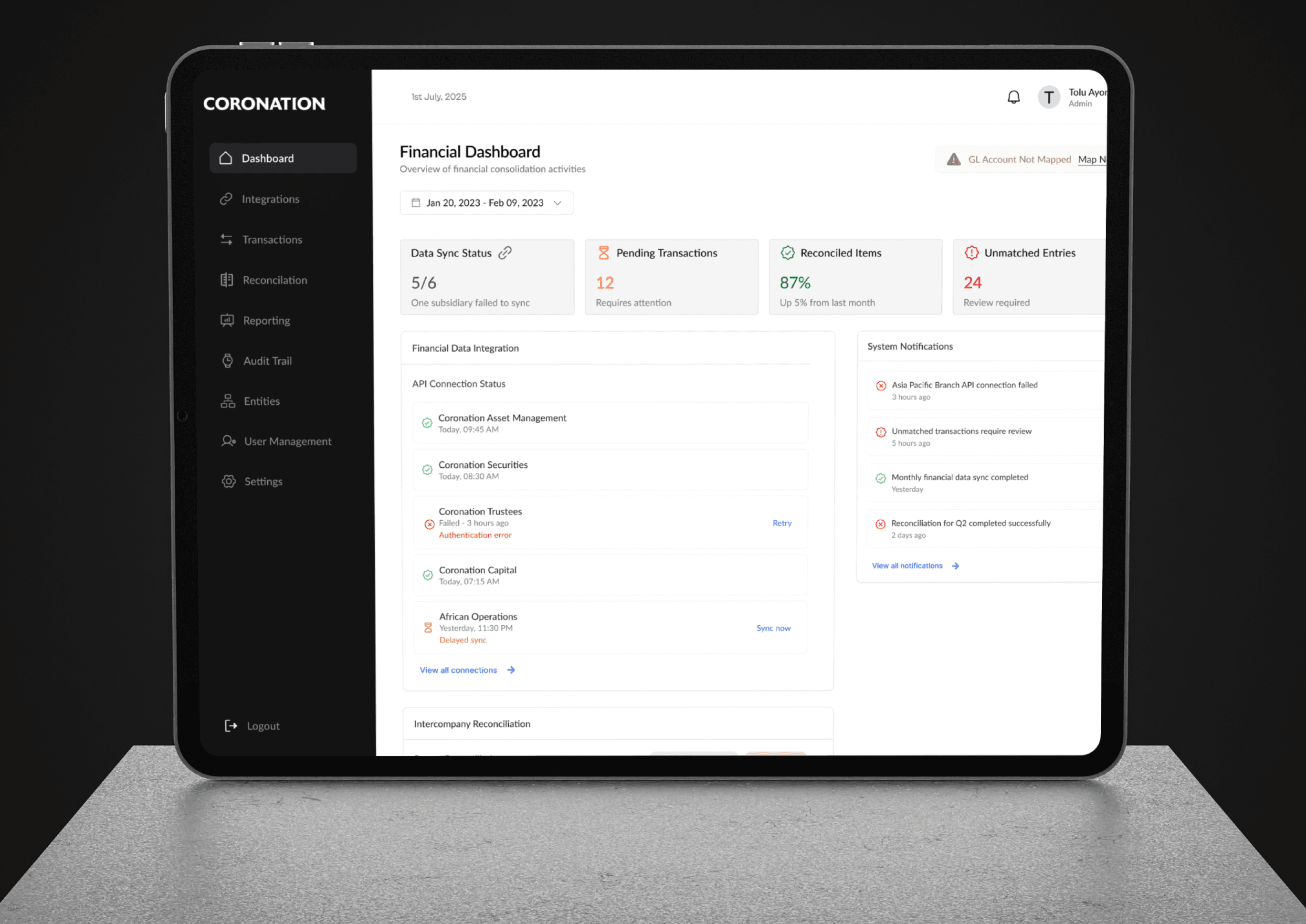
Problem: Finance teams faced fragmented financial data spread across branches and reporting
tools, making it difficult to get a clear and consolidated view of the organization’s
financial position. Reports were often presented as long, flat tables that were hard to
interpret, offered limited context, and made it difficult to drill down from summary figures
to the underlying GL accounts, leading to inefficient analysis and increased risk of errors
during audits and reviews.
Solution: I designed a structured and scalable reporting framework that organizes financial data
into hierarchical, collapsible sections such as Assets, Investments, Loan Portfolio, Liabilities, and
Equity. The system enables users to define context upfront using filters for date, level, and branch,
while providing clear section-level totals and seamless drill-down to GL-level details when needed.
Industry
Fintech
Tools

Figma
Skills
Research, Product Design, Prototyping
Coronation
An internal accounting and financial reporting platform designed to help finance and operations teams monitor, reconcile, and report financial positions across multiple entities, branches, and account levels.
Back
Problem: Finance teams faced fragmented financial data spread across branches and reporting
tools, making it difficult to get a clear and consolidated view of the organization’s
financial position. Reports were often presented as long, flat tables that were hard to
interpret, offered limited context, and made it difficult to drill down from summary figures
to the underlying GL accounts, leading to inefficient analysis and increased risk of errors
during audits and reviews.
Solution: I designed a structured and scalable reporting framework that organizes financial data
into hierarchical, collapsible sections such as Assets, Investments, Loan Portfolio, Liabilities, and
Equity. The system enables users to define context upfront using filters for date, level, and branch,
while providing clear section-level totals and seamless drill-down to GL-level details when needed.
Visual Design
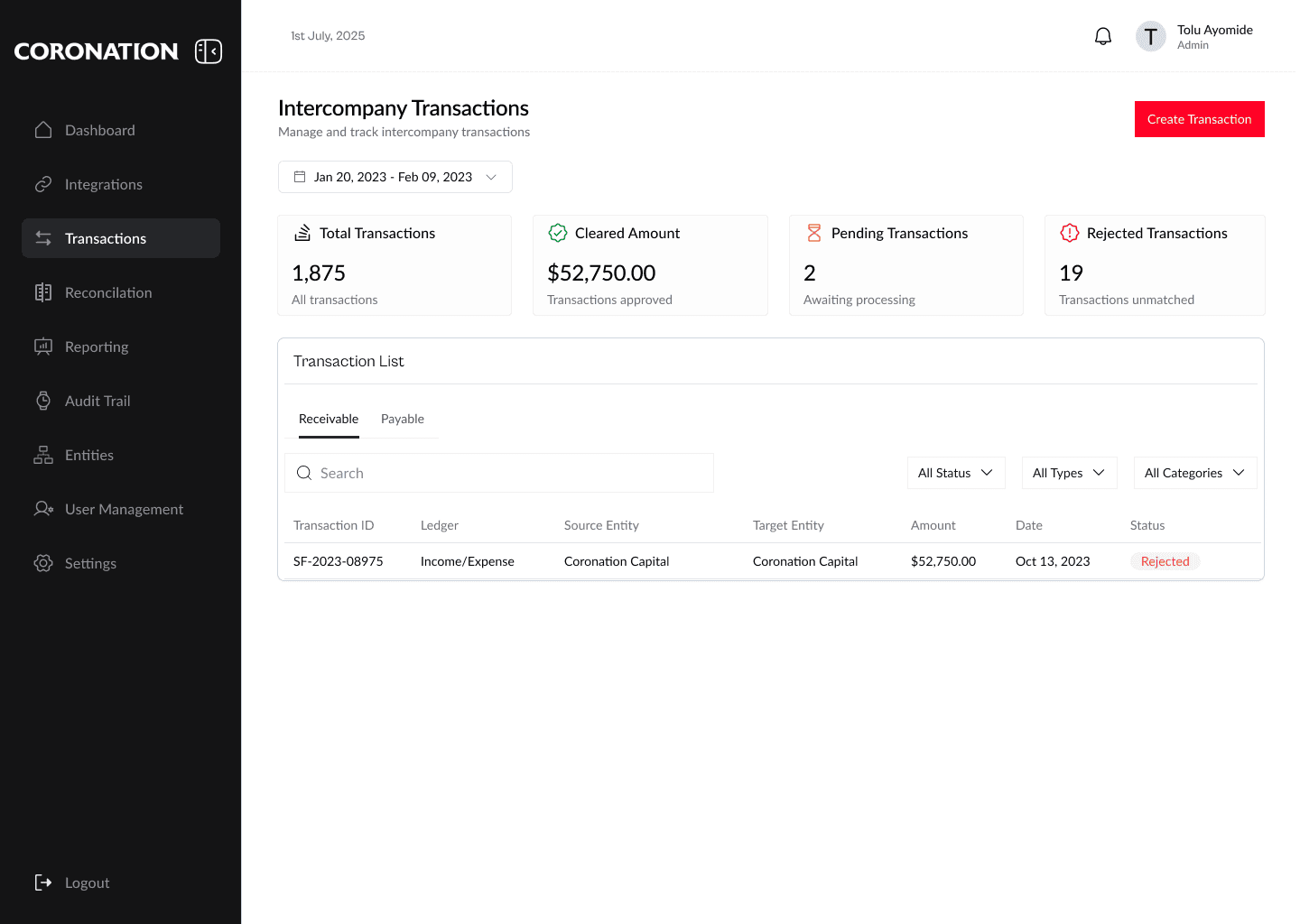
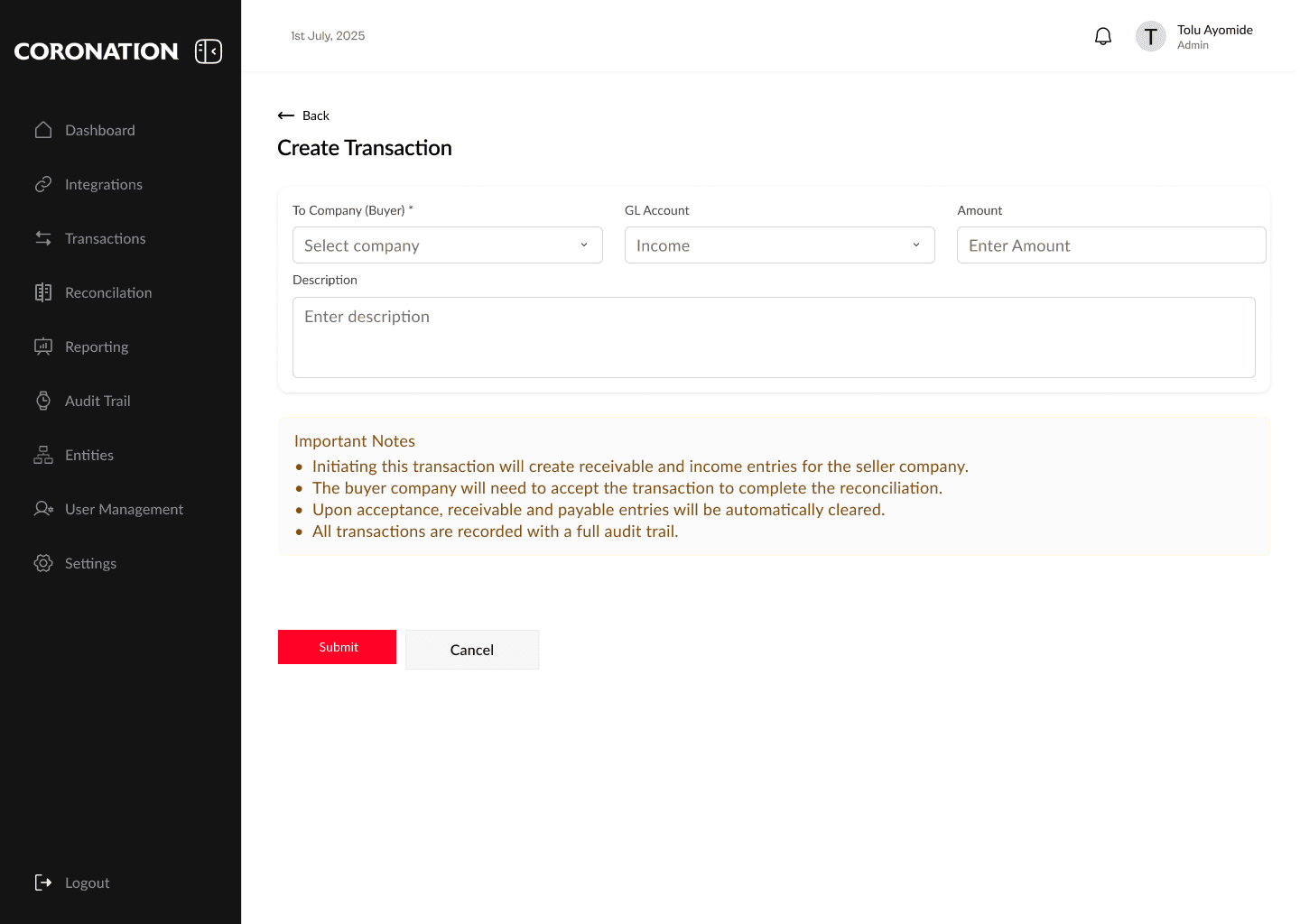
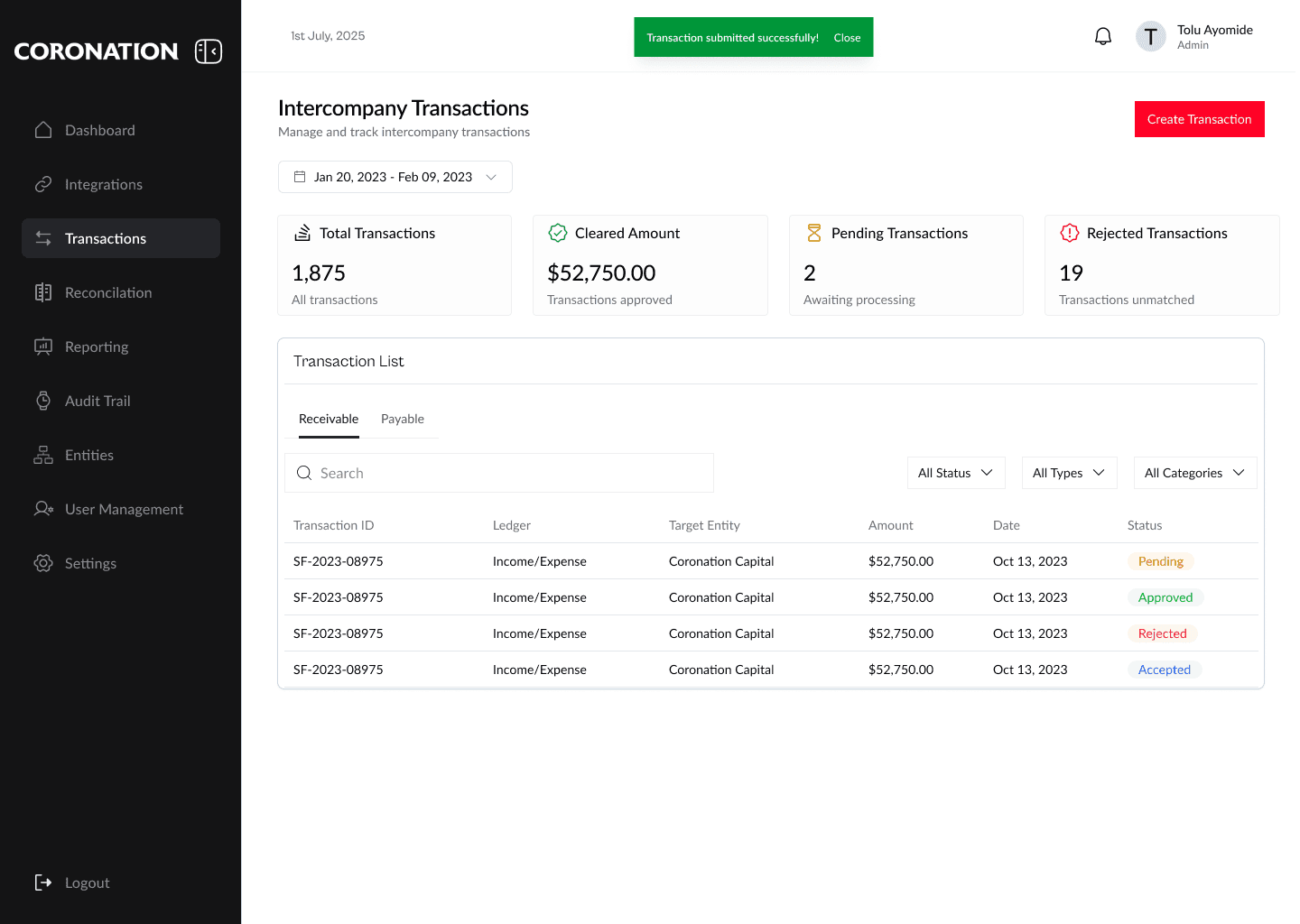
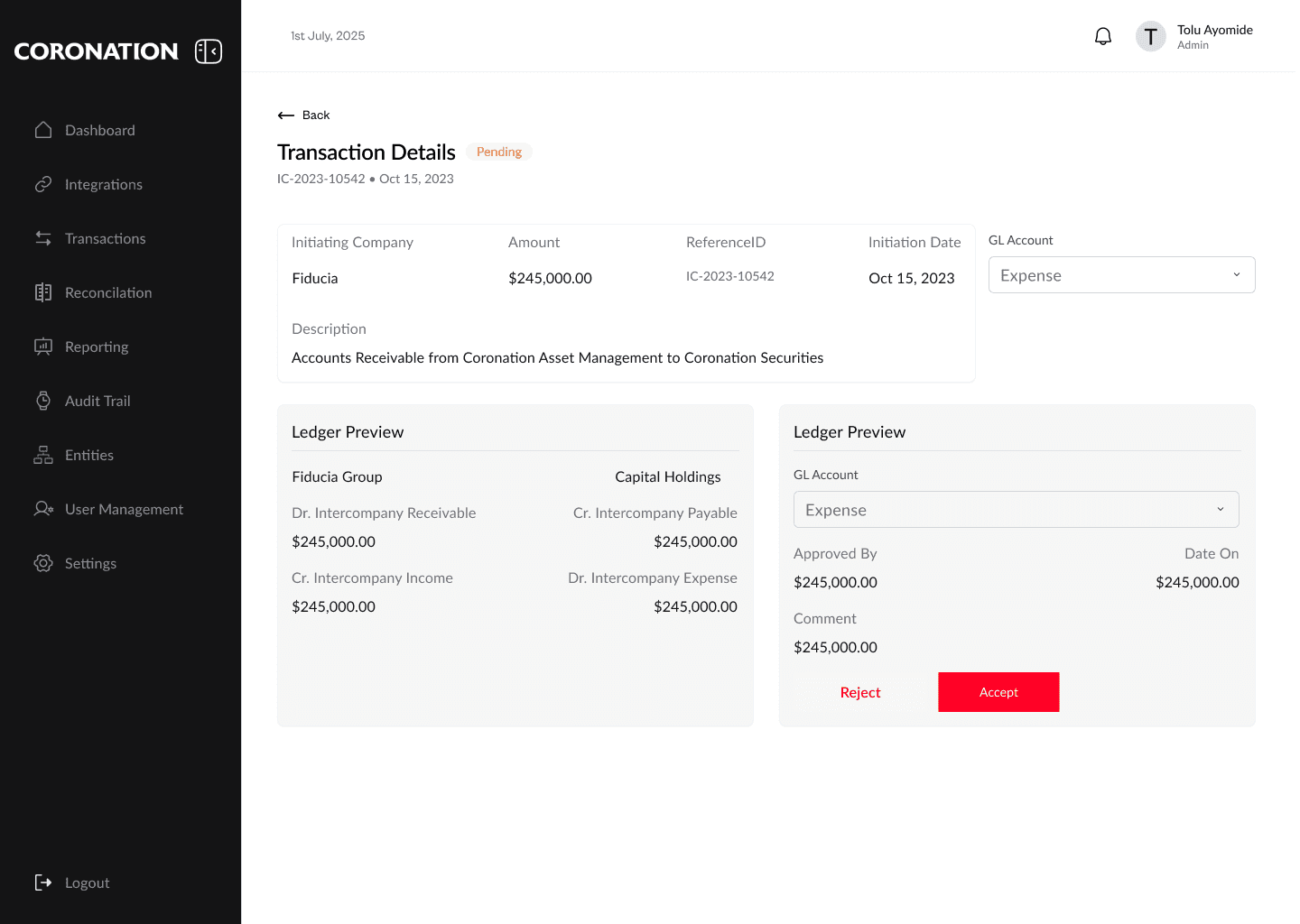
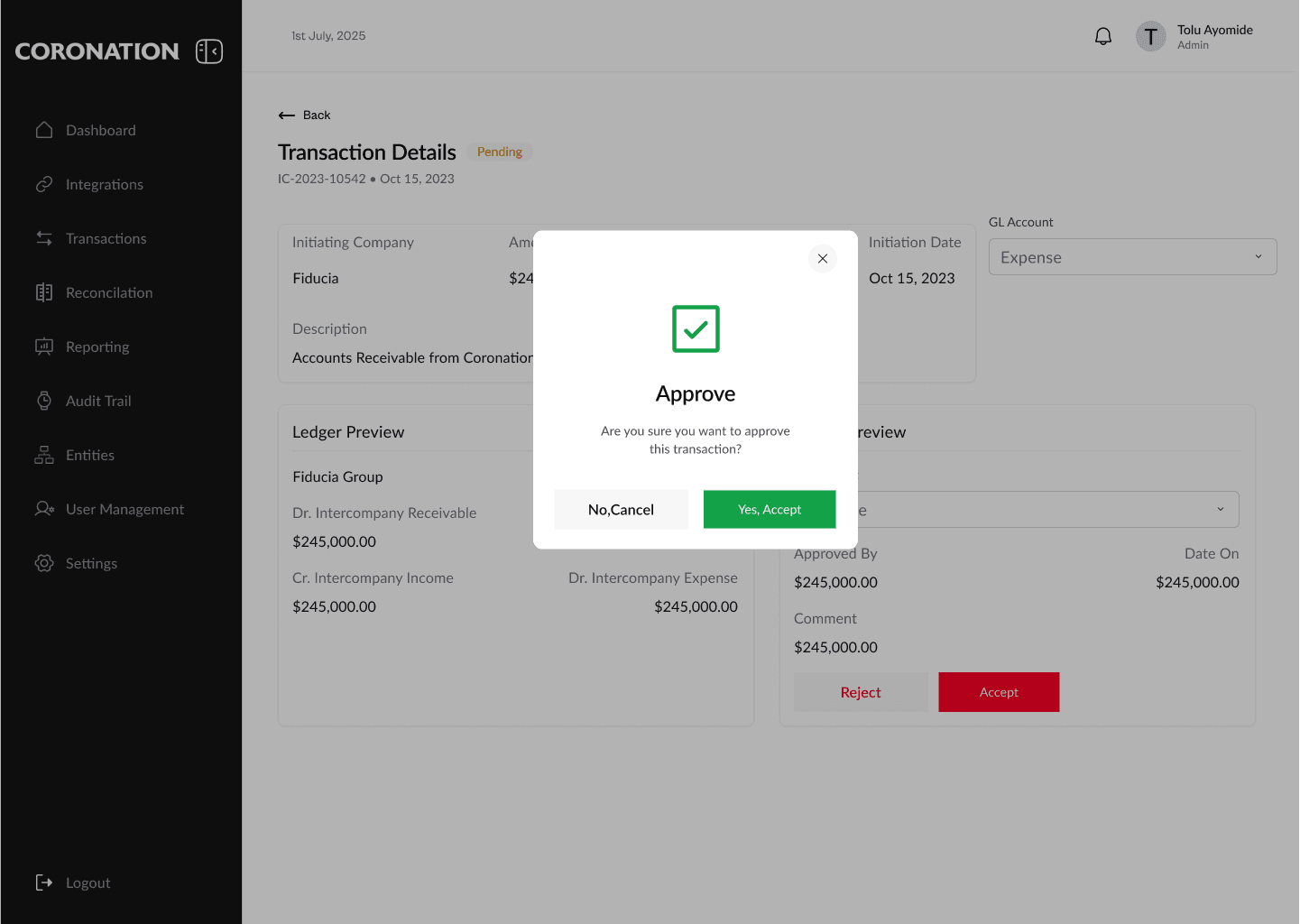
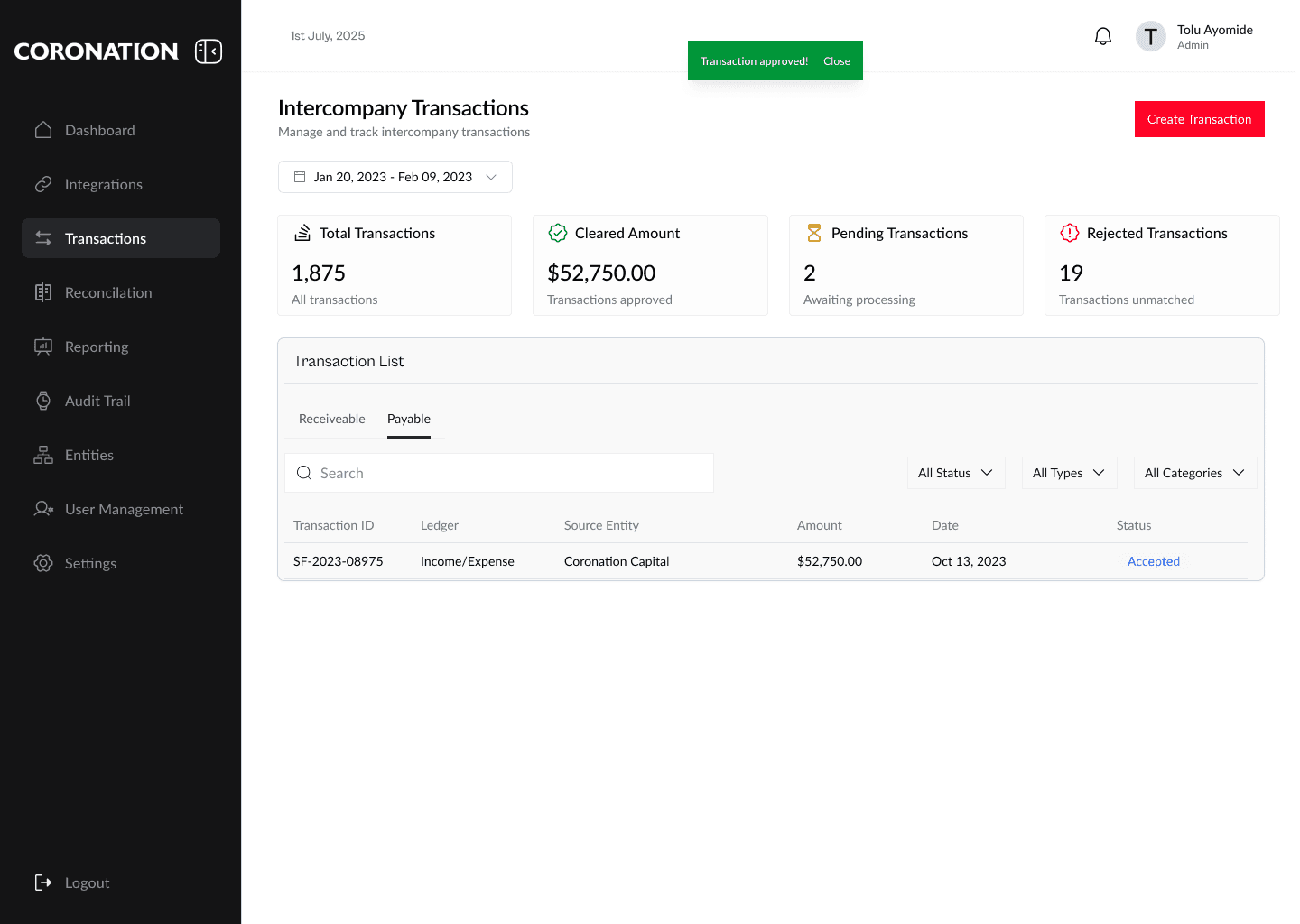
Screens from INTERCOMPANY TRANSFERS
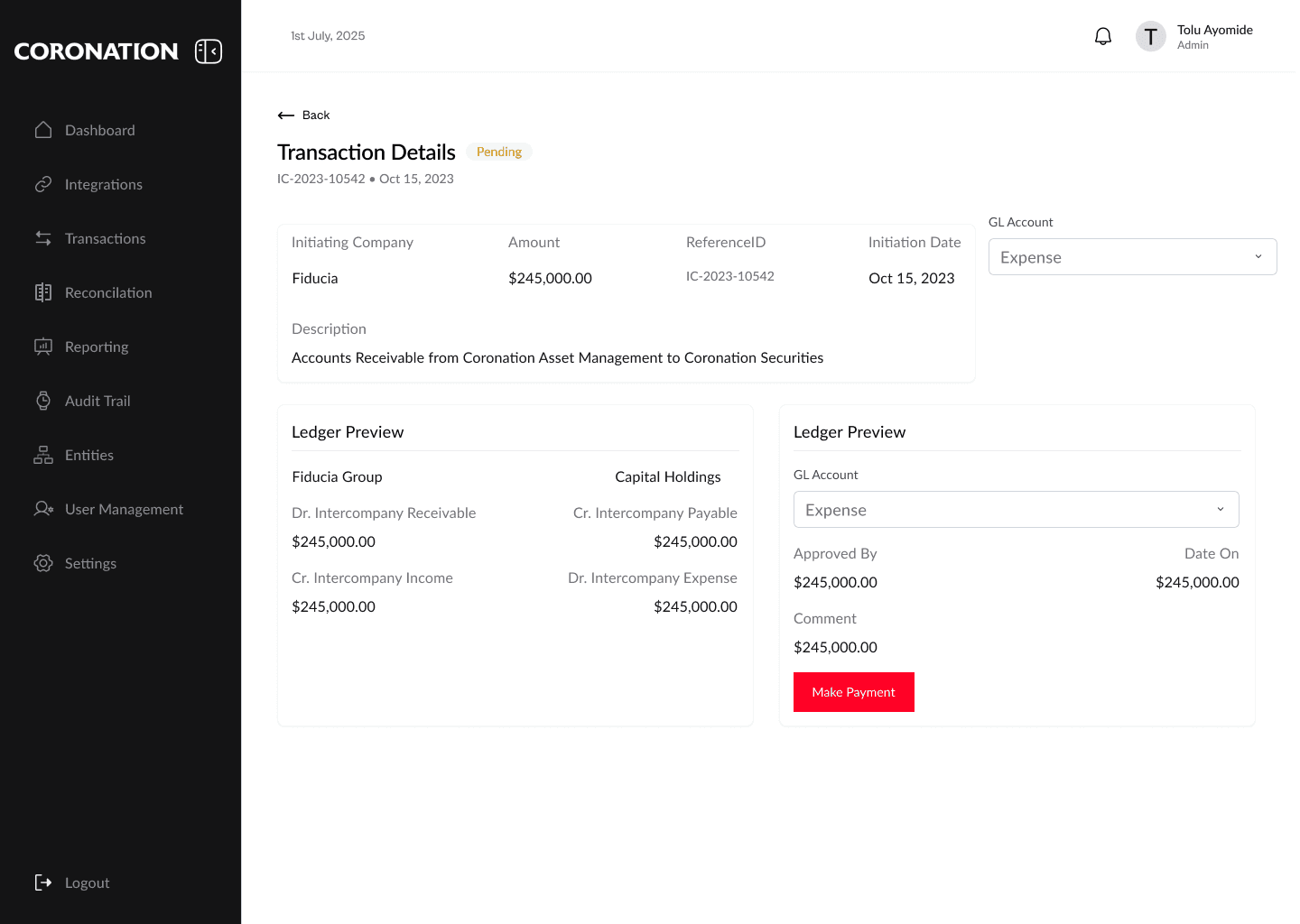
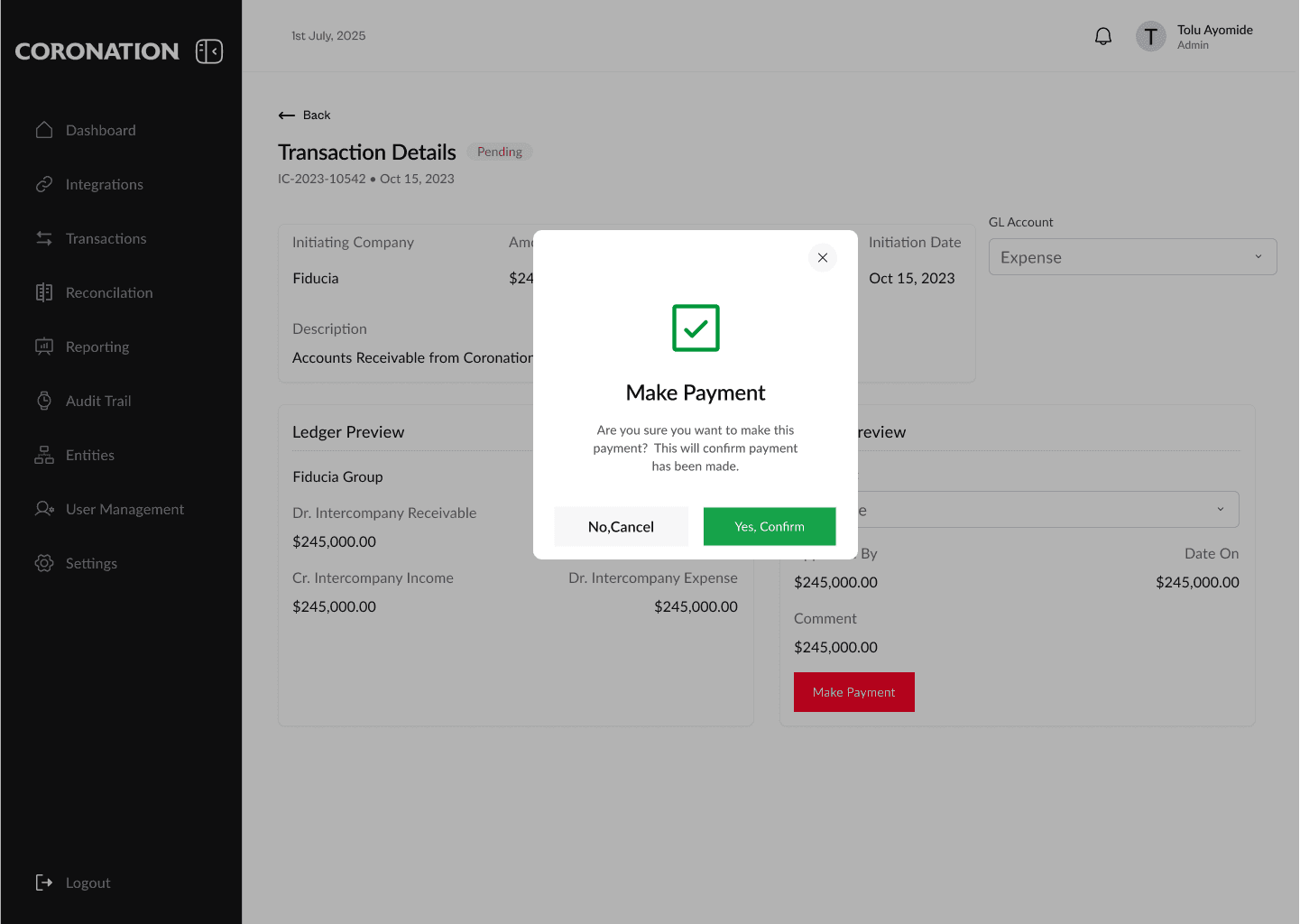
The Intercompany Transfer flow enables users to record, track, and validate transactions between related entities or subsidiaries within the organization, ensuring accurate balances across all accounts. The system maintains a complete audit trail, allowing users to track who initiated, approved, or modified each transfer.
Users initiate an intercompany transfer by selecting the source entity, destination entity, transfer amount, currency, and effective date. The system automatically generates mirrored entries for both entities, ensuring accounting symmetry and compliance.
Visual Design
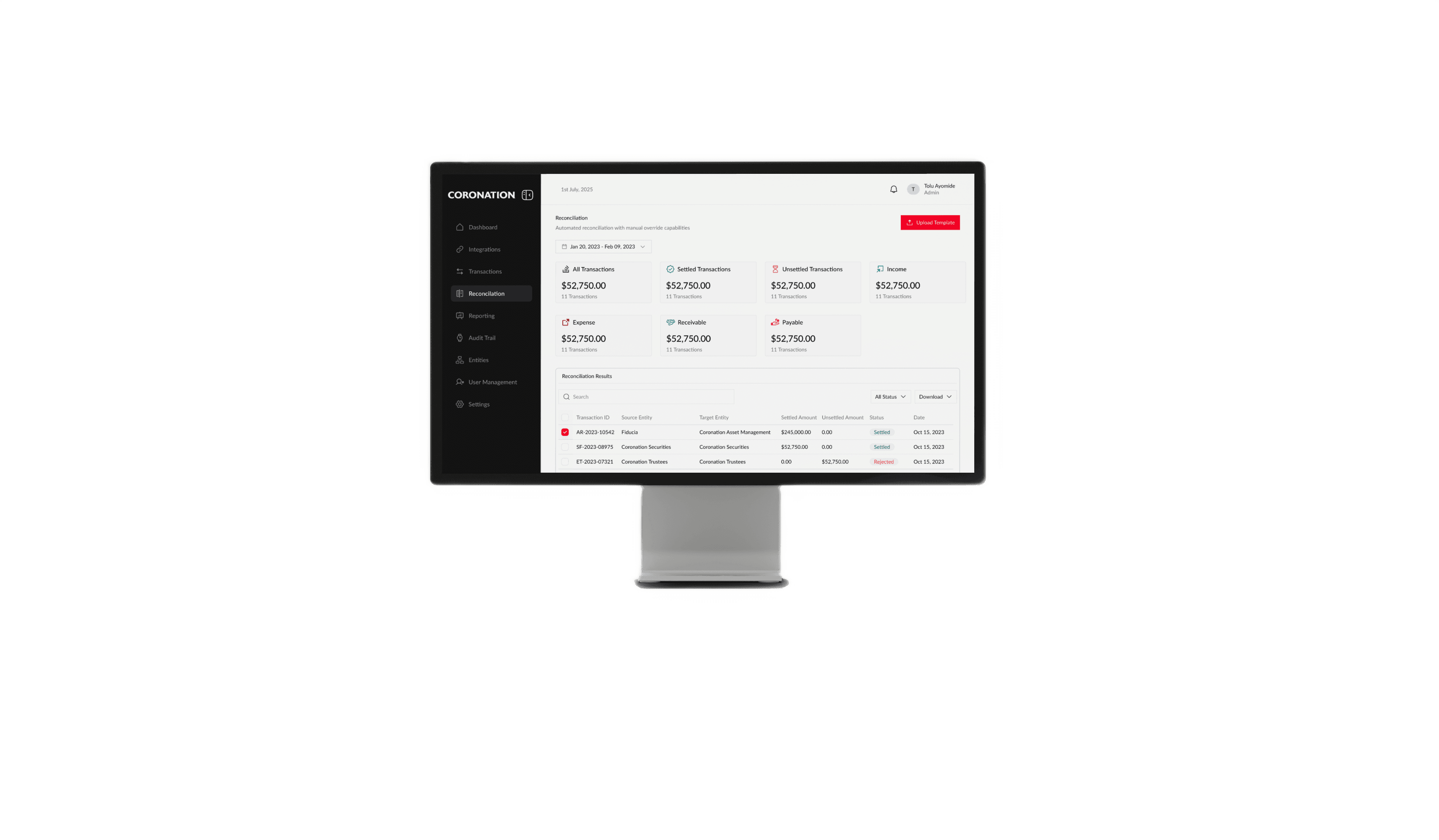
Screens from RECONCILIATION
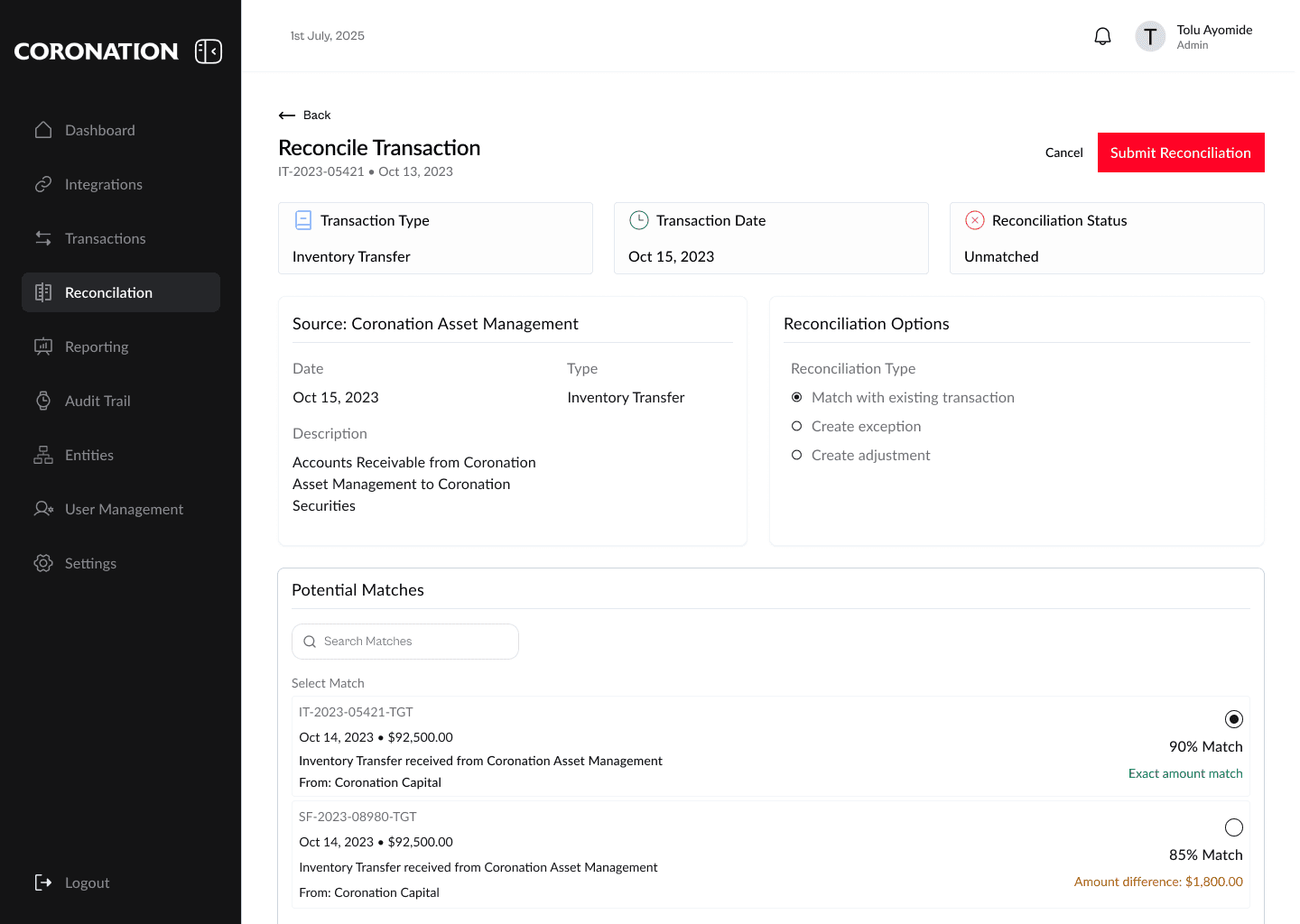
The Reconciliation flow is designed to help finance teams match internal system records with external financial statements (such as bank statements) in order to identify discrepancies, confirm balances, and ensure accounting accuracy.
Users begin the reconciliation process by selecting the account, date range, and reconciliation type. The system presents side-by-side views of system transactions and external records, allowing users to visually compare amounts, dates, and references.
During the interviews, we uncovered some key challenges:
Employees often discovered Earnipay before their employers, meaning they had to
recommend the platform personally. Unfortunately, we lacked a streamlined process for
this crucial step.
Approximately 45% of employees expressed a desire to share in the revenue generated
from transactions made through Earnipay.
Around 60% of employers expressed concerns about integrating Earnipay into their
existing systems, fearing it would complicate their payroll and book balancing processes.
Notably, 60% of the participants felt that our branding positioned us as a loan company
rather than emphasizing the core value we aimed to provide.
72% of the participants complained about always having to sign in whenever they open
the app
65% complained that the inclusion of two input types in the withdrawal process is
confusing.
Armed with these valuable insights, I led the charge to find creative solutions that would
address these challenges head-on. Here’s how we approached it:
Change of Brand Messaging
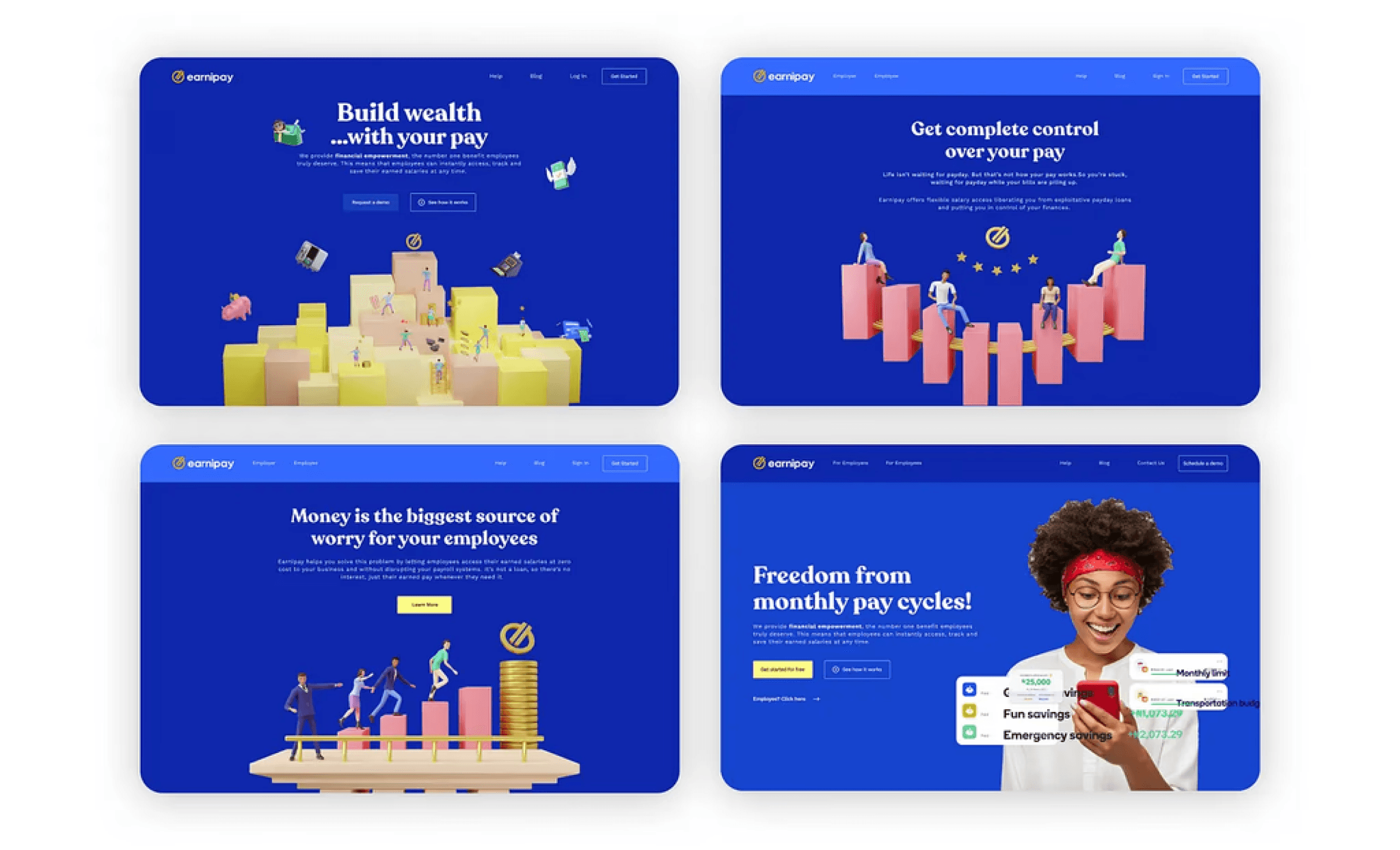
Recognizing the need to refine our messaging, I spearheaded efforts to explore different
approaches to communicate the true value of Earnipay. We developed various alternative
brand messages and experimented to find a more compelling and accurate way of
conveying our value proposition.
Product Segmentation
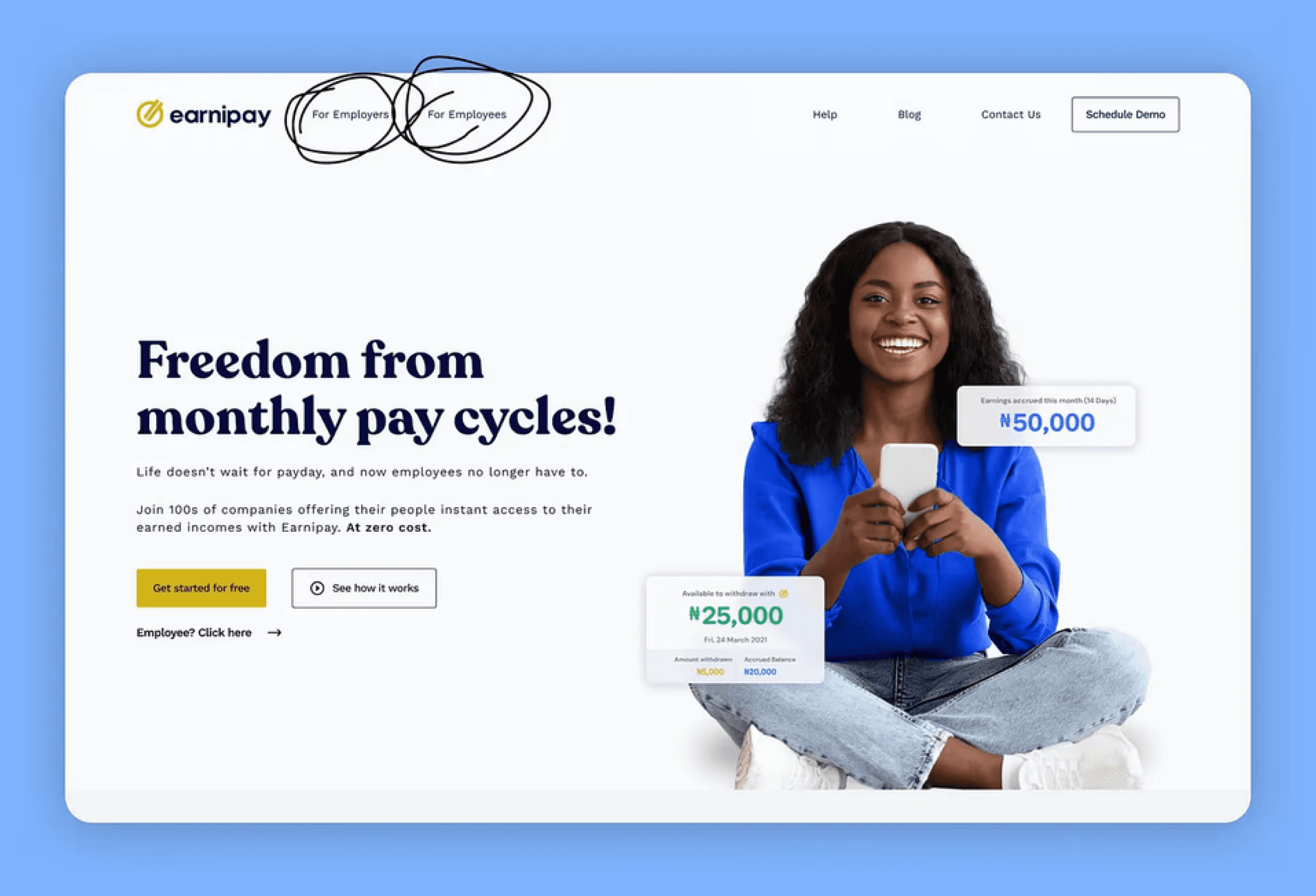
Based on the research findings, we realized that solely targeting employees was
insufficient. To address this, I led the team in a strategic shift to simultaneously target
employers and employees. We revamped our website, creating unique sections with
tailored messaging for each audience, effectively addressing their specific needs and
concerns.
Introduction of the Payroll System
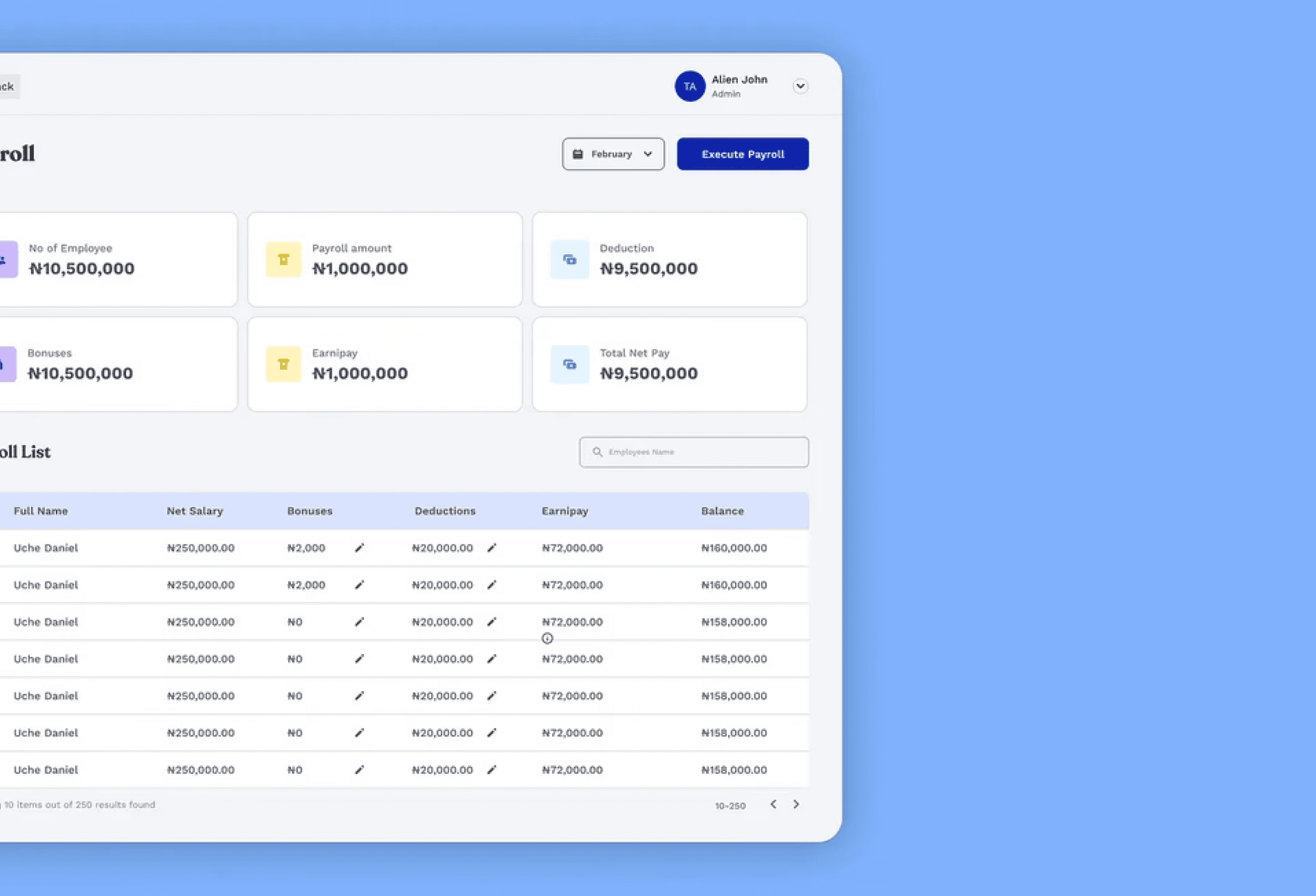
Through careful exploration of integration options, we concluded that building our own
payroll management system would be the most effective solution. As the product
designer, I guided the development of this system as a feature within Earnipay,
streamlining the onboarding process for our users and enhancing their overall experience.
It was crucial to ensure that this feature complemented existing payroll providers rather
than competing with them.
Improved Mobile App Experience
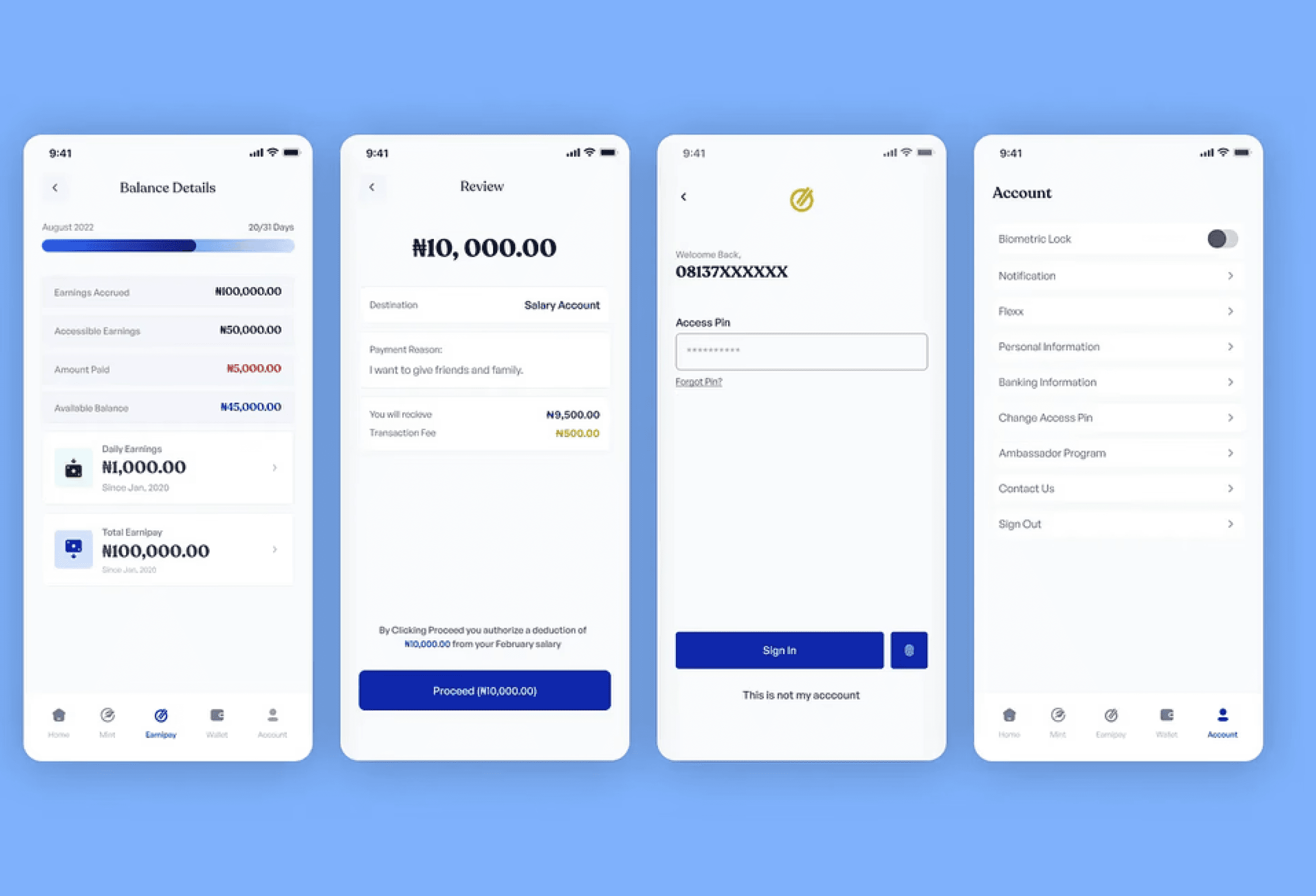
We implemented effective solutions to tackle these issues we identified from the research
and improve the mobile experience. Firstly, we introduced a persistent login feature that
securely stored user credentials. This enhancement eliminated the need for repetitive
sign-ins, allowing users to seamlessly access the app without the hassle of entering their
login details every time. By providing a convenient and time-saving solution, we
significantly improved user satisfaction.
In response to the confusion surrounding the withdrawal process, we made important
changes to simplify and streamline it. Through extensive user research and usability
testing, we identified the pain points and redesigned the process accordingly. By
consolidating the two input types into a single, intuitive interface, we eliminated confusion
and created a more user-friendly experience. Users now navigate a clear and unified flow,
ensuring a smooth and efficient withdrawal process.
With these solutions in place, we successfully addressed the users’ concerns and
significantly enhanced the mobile experience on the Earnipay app. The persistent login
feature and simplified withdrawal process have made using the app more convenient,
efficient, and user-centric.
Simplification of the System
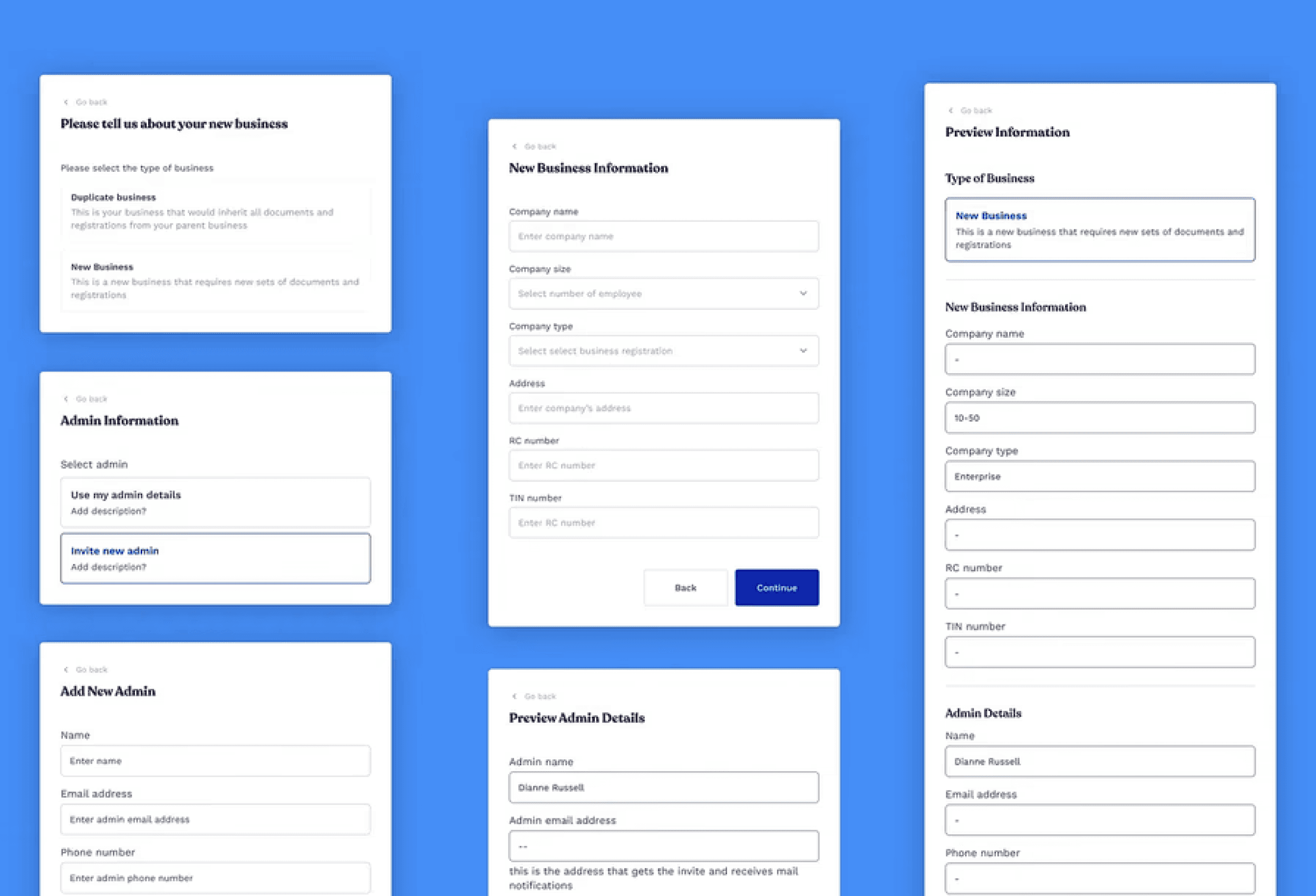
During the research process, I identified a significant friction point that had gone
unnoticed. Our existing system required each company, including sub-companies under a
parent company, to register individually with separate login details. This complexity
created challenges for administrators. To simplify the process, I led the team in designing
a streamlined registration system that allowed sub-companies to be easily included under
the parent company’s account. We communicated this update through a newsletter,
resulting in a surge of new business registrations.
And then…
The realization dawned upon us that even seemingly minor changes in a product can have
a profound impact on its success. Guided by user data and feedback, I made strategic
decisions and collaborated with the team to implement the necessary changes within a
tight timeframe of three months. The efforts paid off, as we witnessed a remarkable surge
in both product adoption and revenue generation in just 92 days.
Its important to mention that..
As the product designer, I am proud to have played a crucial role in this transformation,
leveraging user insights to identify pain points, redesign processes, and introduce new
features that resonated with both employers and employees. The success of this
endeavour serves as a testament to the power of data-driven decision-making and a
user-centric approach.
1
Discovery
Reviewed detailed business requirements and functional specs
Stakeholder workshops with Group Finance and subsidiary teams
Mapped existing month‑end and intercompany workflows
Identified risk points: manual handling, overrides, lack of traceability
2
Definition
Reviewed detailed business requirements and functional specs
Stakeholder workshops with Group Finance and subsidiary teams
Mapped existing month‑end and intercompany workflows
Identified risk points: manual handling, overrides, lack of traceability
3
Ideation
During the UX process, reporting layouts were designed using progressive disclosure to balance executive-level summary with analytical depth. The experience surfaces group-level confidence first, then allows users to drill into entity and transaction details without losing context.
4
Delivery
End‑to‑end UX flows for all epics
High‑fidelity UI designs and interaction specs
Design system for data‑dense enterprise UI
Edge‑case and error‑state definitions
Engineering‑ready documentation and handoff
5
Validate
The goal is to gather feedback from real users and validate the assumptions made during the previous phases (discovery, definition,ideation, delivery and validate). The aim is to refine the product, ensuring it meets the needs of CORONATION and addresses their pain points effectively.
Approach
Design Process
During the interviews, we uncovered some key challenges:
Employees often discovered Earnipay before their employers, meaning they had to
recommend the platform personally. Unfortunately, we lacked a streamlined process for
this crucial step.
Approximately 45% of employees expressed a desire to share in the revenue generated
from transactions made through Earnipay.
Around 60% of employers expressed concerns about integrating Earnipay into their
existing systems, fearing it would complicate their payroll and book balancing processes.
Notably, 60% of the participants felt that our branding positioned us as a loan company
rather than emphasizing the core value we aimed to provide.
72% of the participants complained about always having to sign in whenever they open
the app
65% complained that the inclusion of two input types in the withdrawal process is
confusing.
Armed with these valuable insights, I led the charge to find creative solutions that would
address these challenges head-on. Here’s how we approached it:
Change of Brand Messaging
Recognizing the need to refine our messaging, I spearheaded efforts to explore different
approaches to communicate the true value of Earnipay. We developed various alternative
brand messages and experimented to find a more compelling and accurate way of
conveying our value proposition.
Product Segmentation
Based on the research findings, we realized that solely targeting employees was
insufficient. To address this, I led the team in a strategic shift to simultaneously target
employers and employees. We revamped our website, creating unique sections with
tailored messaging for each audience, effectively addressing their specific needs and
concerns.
Introduction of the Payroll System
Through careful exploration of integration options, we concluded that building our own
payroll management system would be the most effective solution. As the product
designer, I guided the development of this system as a feature within Earnipay,
streamlining the onboarding process for our users and enhancing their overall experience.
It was crucial to ensure that this feature complemented existing payroll providers rather
than competing with them.
Improved Mobile App Experience
We implemented effective solutions to tackle these issues we identified from the research
and improve the mobile experience. Firstly, we introduced a persistent login feature that
securely stored user credentials. This enhancement eliminated the need for repetitive
sign-ins, allowing users to seamlessly access the app without the hassle of entering their
login details every time. By providing a convenient and time-saving solution, we
significantly improved user satisfaction.
In response to the confusion surrounding the withdrawal process, we made important
changes to simplify and streamline it. Through extensive user research and usability
testing, we identified the pain points and redesigned the process accordingly. By
consolidating the two input types into a single, intuitive interface, we eliminated confusion
and created a more user-friendly experience. Users now navigate a clear and unified flow,
ensuring a smooth and efficient withdrawal process.
With these solutions in place, we successfully addressed the users’ concerns and
significantly enhanced the mobile experience on the Earnipay app. The persistent login
feature and simplified withdrawal process have made using the app more convenient,
efficient, and user-centric.
Simplification of the System
During the research process, I identified a significant friction point that had gone
unnoticed. Our existing system required each company, including sub-companies under a
parent company, to register individually with separate login details. This complexity
created challenges for administrators. To simplify the process, I led the team in designing
a streamlined registration system that allowed sub-companies to be easily included under
the parent company’s account. We communicated this update through a newsletter,
resulting in a surge of new business registrations.
And then…
The realization dawned upon us that even seemingly minor changes in a product can have
a profound impact on its success. Guided by user data and feedback, I made strategic
decisions and collaborated with the team to implement the necessary changes within a
tight timeframe of three months. The efforts paid off, as we witnessed a remarkable surge
in both product adoption and revenue generation in just 92 days.
Its important to mention that..
As the product designer, I am proud to have played a crucial role in this transformation,
leveraging user insights to identify pain points, redesign processes, and introduce new
features that resonated with both employers and employees. The success of this
endeavour serves as a testament to the power of data-driven decision-making and a
user-centric approach.
Group Finance Lead

Chika
45 years
Senior finance leader responsible for group-wide financial integrity, consolidation accuracy, and regulatory compliance.
Roles and Responsibilities
Owns group consolidation rules and reporting structure
Reviews and approves consolidated outputs
Oversees inter-company governance policies
Escalation point for unresolved reconciliation issues
Point of View (POV)
I don’t just need the numbers — I need confidence that they are right, traceable, and defensible during audit.
Goals
Produce accurate, timely consolidated financial statements
Ensure all intercompany transactions are eliminated correctly
Maintain strong governance and control across subsidiaries
Enable data-driven decision-making at group level
Pain points
Inconsistent data coming from subsidiaries
Late or disputed intercompany balances
Overreliance on spreadsheets during consolidation
High audit exposure due to weak traceability
User stories
As a Group Finance Lead, I want all intercompany transactions to come from a single source of truth so consolidation errors are eliminated.
As a Group Finance Lead, I want reconciled balances to be automatically eliminated so group reports are clean by default.
As a Group Finance Lead, I want visibility into unresolved exceptions before close so risks are surfaced early.
Empathize
User Persona
1
Access & Context Setting
User Actions
Logs into Coronation
Navigates to Reporting → Balance Sheet
Selects date, level, and branch
Thoughts
"Let me make sure this is the consolidated view for this month."
Emotions
Focused, cautious
Opportunities
Filter-first layout
Clear labels for reporting level and date
2
High-Level Review
User Actions
Scans section totals (Assets, Liabilities, Equity)
Checks if balances align
Thoughts
"Do these totals look right compared to last month?"
Emotions
Analytical
Opportunities
Section-level totals
Clear hierarchy and spacing
3
Drill-Down Investigation
User Actions
Expands Assets or Loan Portfolio
Reviews GL account balances
Thoughts
"This figure looks high — what's driving it?"
Emotions
Engaged, investigative
Opportunities
Collapsible sections
GL-level breakdowns within the same screen
4
Validation & Comparison
User Actions
Compares balances across sections
Confirms Assets = Liabilities + Equity
Thoughts
"Good — this reconciles."
Emotions
Confident
Opportunities
Visual balance validation
Consistent table structure
5
Export & Reporting
User Actions
Exports report to Excel
Shares with auditors or leadership
Thoughts
"I can send this as-is."
Emotions
Relieved, assured
Opportunities
One-click export
Audit-ready formatting
Define
User Journey Map
Financial Data Integration
Challenge: Pull accurate financial data from multiple subsidiary systems.
Solution Highlights
API connection setup with test feedback
Scheduled and real‑time sync options
Validation checks before consolidation
Entity‑level sync status dashboard
Result: Upstream data issues surfaced early, not during reporting..
Intercompany Transactions & Reconciliation
Challenge: Eliminate mismatches and manual reconciliation.
Solution Highlights
Central inter-company register as the master record
Dual‑entry confirmation workflow (Pending → Accepted → Posted)
Auto‑matching with partial‑match visibility
Exception queue with commentary and status tracking
Result: Clear accountability and faster resolution of discrepancies.
Consolidation & Reporting
Challenge: Provide clarity across group and entity views.
Solution Highlights
Columnar consolidated statements (Group + Entities)
Clear intercompany elimination indicators
Excel‑ready exports with pivot support
Period‑based report generation
Result: Reduced spreadsheet manipulation and faster analysis.
Outcomes & Impact
60 - 80%
Operational Impact (Projected)
30–50% reduction in month‑end close time
Significant reduction in reconciliation errors
Improved audit confidence and traceability
80 - 90%
Design Impact
Transformed complex finance operations into a coherent system
Balanced automation with human oversight
Established a scalable foundation for future entities and features
Ideate
Key UX Solutions
Delivery
Style Guide
Coronation style guide defines the foundational elements of the product’s interface — including typography, color palette, icons, button styles, form inputs, and spacing. It was designed with a mobile-first approach and optimized for readability, scalability, and ease of development handoff.
Typography
Lato
Colors
Aa
Aa Bb Cc Dd Ee Ff Gg Hh Ii Jj Kk Ll Mm Nn Oo Pp Qq Rr Ss Tt Uu Vv Ww Xx Yy Zz
0123456789 !@#$%._+<>?\^&*()
Extralight
Light
Regular
Medium
Semibold
Bold
ExtraBold
Main colors
Primary
FF0226
Grayscale
Gray/800
#000000
Gray/600
#141415
Gray/400
#98A2B3
Gray/300
#D0D5DD
The End.
Thank you
for scrolling!
I am open to work on new/existing and innovative ideas
The End.
View on desktop for
more details
I am open to work on new/existing and innovative ideas